Hans Kammerer / Walter Belz / Max Bächer: Buchhaus Wittwer, 1968C–1970
- Stuttgart, Germany, Show on map
- #COM #Western Europe
-
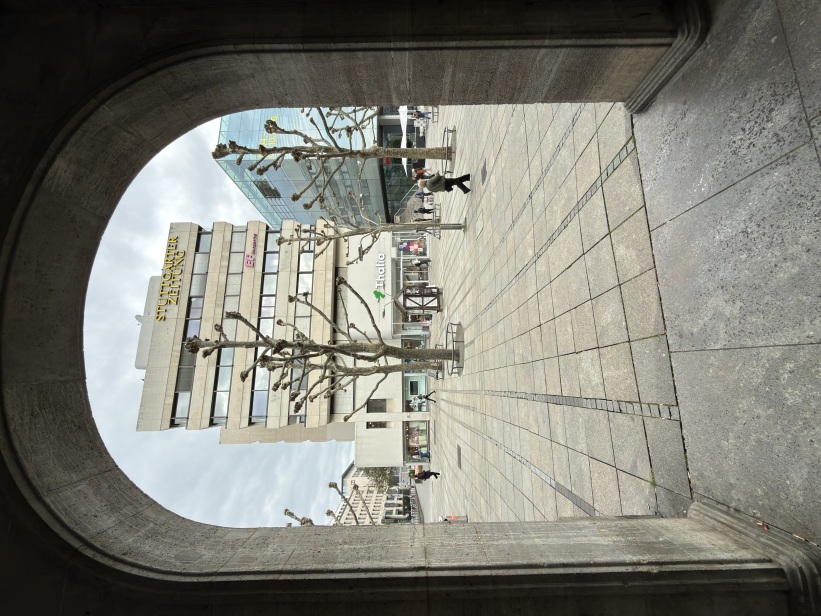
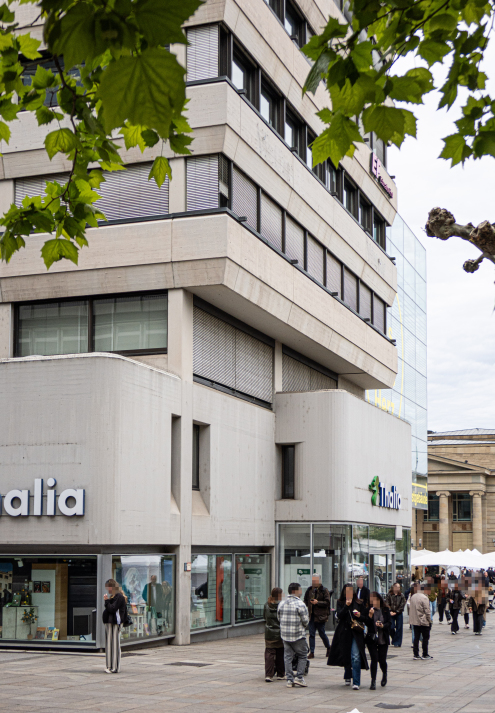
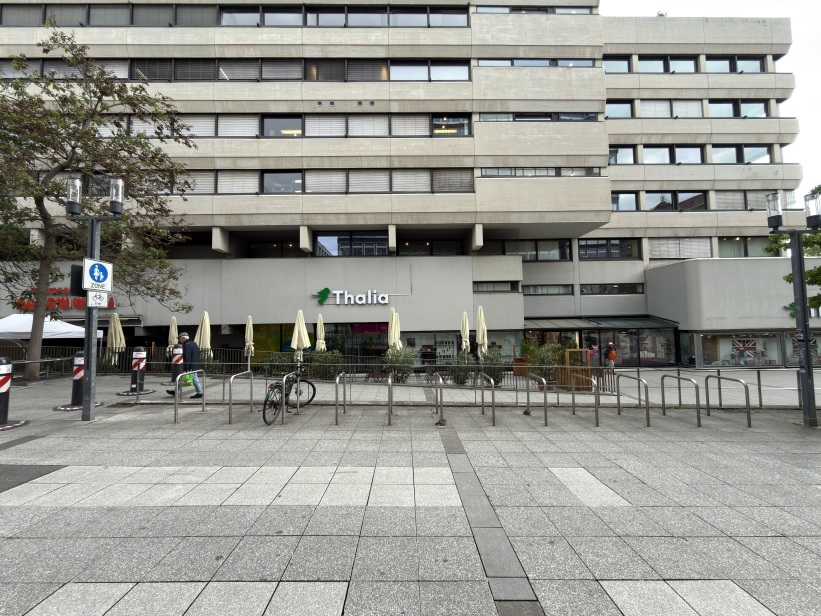
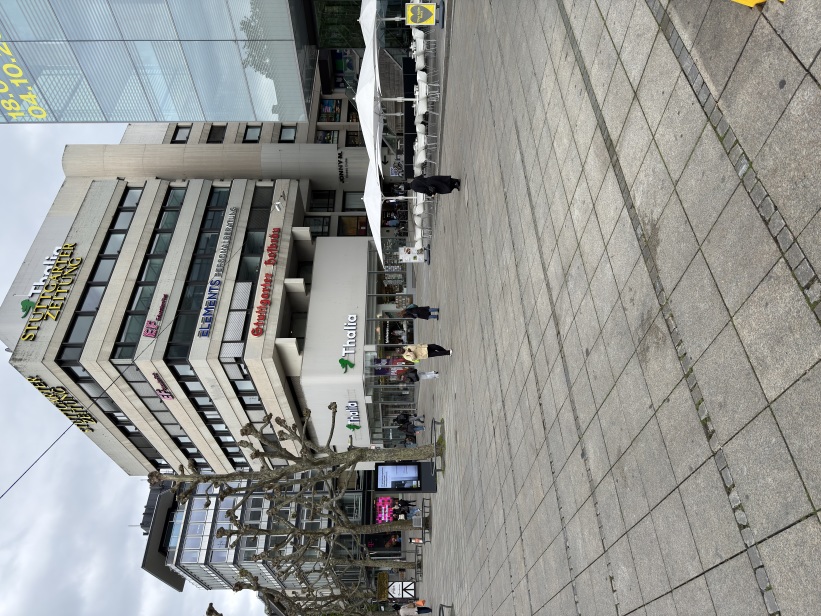
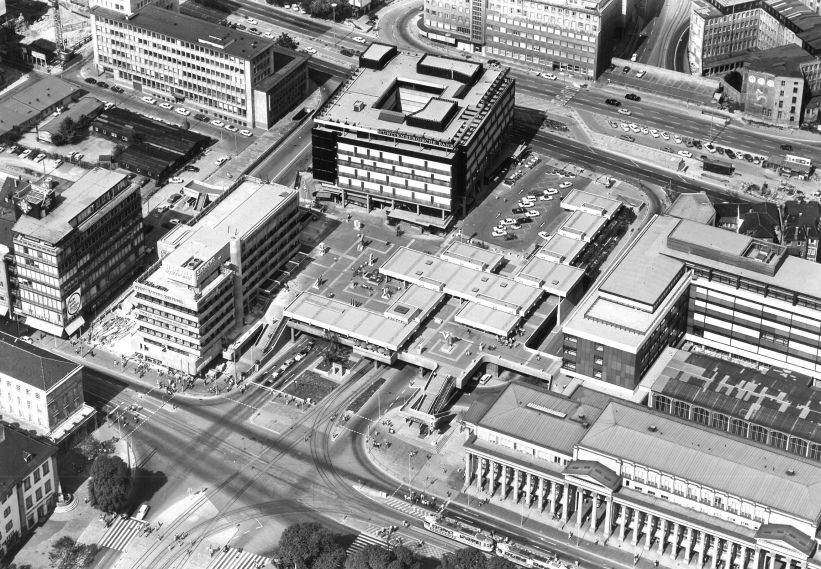
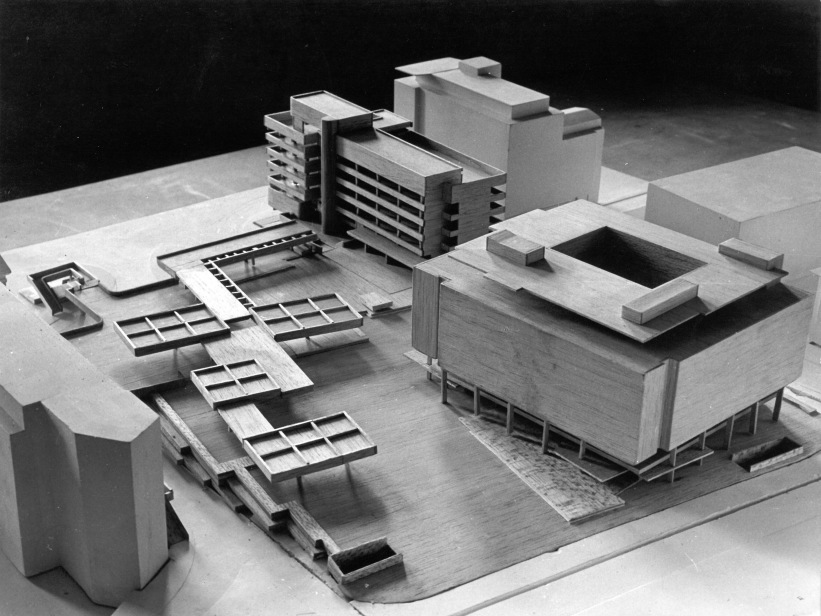
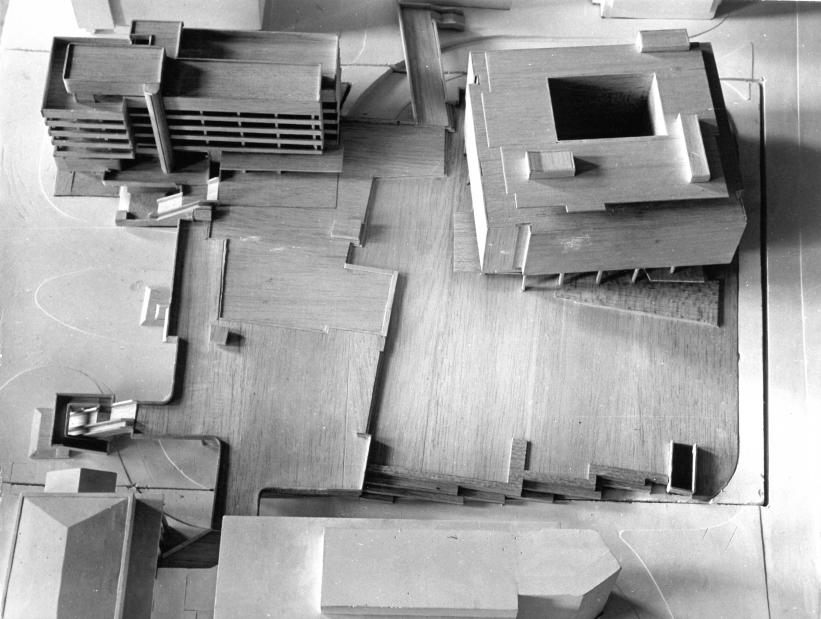
The Buchhaus Wittwer forms part of Stuttgart’s Kleiner Schlossplatz, an artificial elevated plaza created in the late 1960s as part of a major reconfiguration of traffic infrastructure. Tram lines and car traffic were relocated into tunnels, allowing for the construction of a multi-level pedestrian landscape above. Designed by Kammerer + Belz in collaboration with Max Bächer, the adjacent concrete platform emerged from a competition won in 1965. Within this context, the Wittwer building was conceived as a connective element, linking the upper plaza with the commercial axis of Königstraße below.
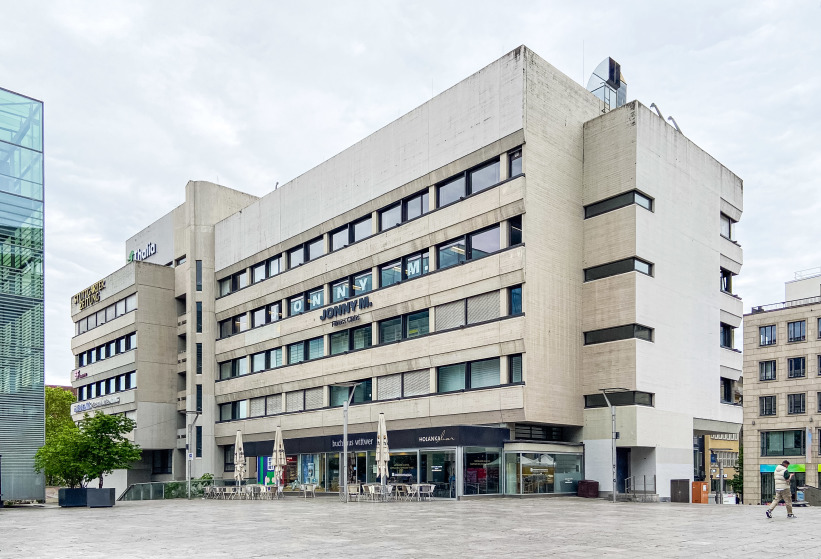
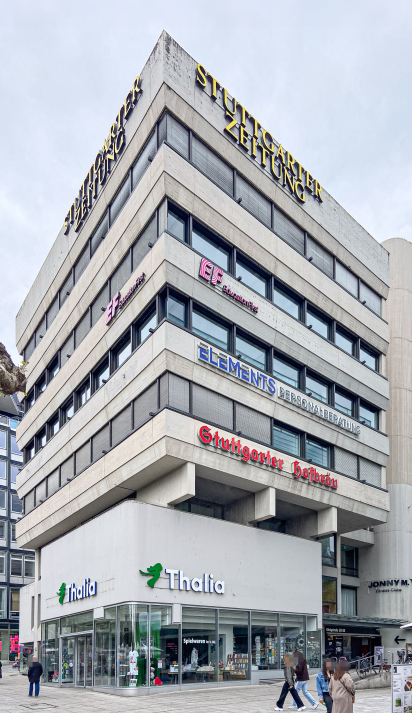
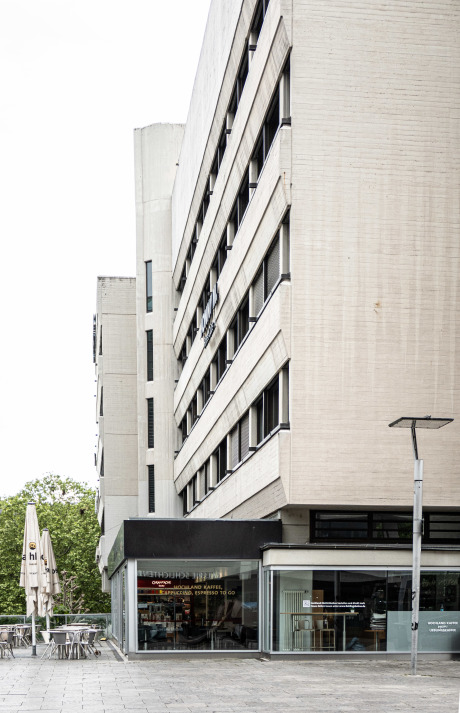
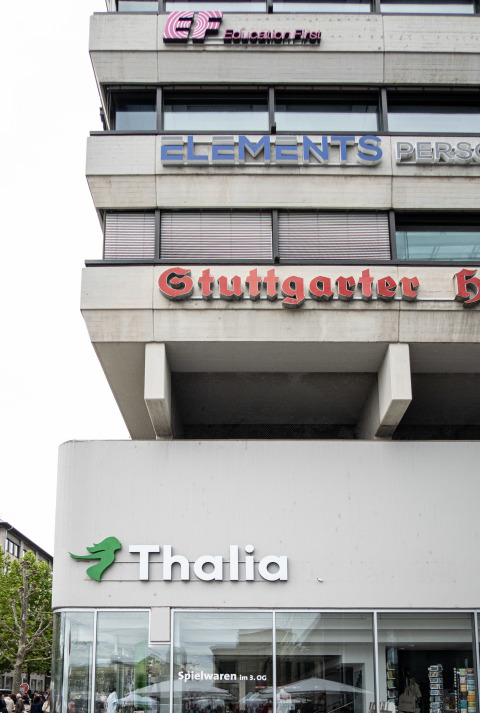
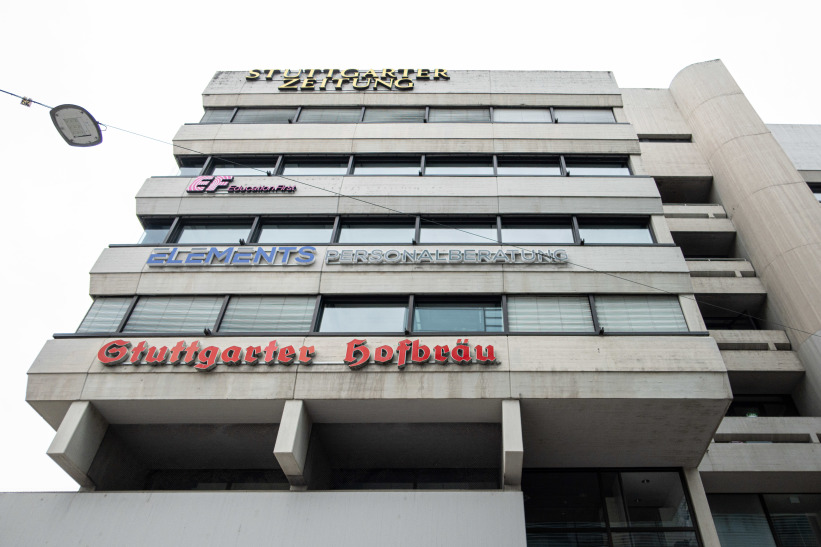
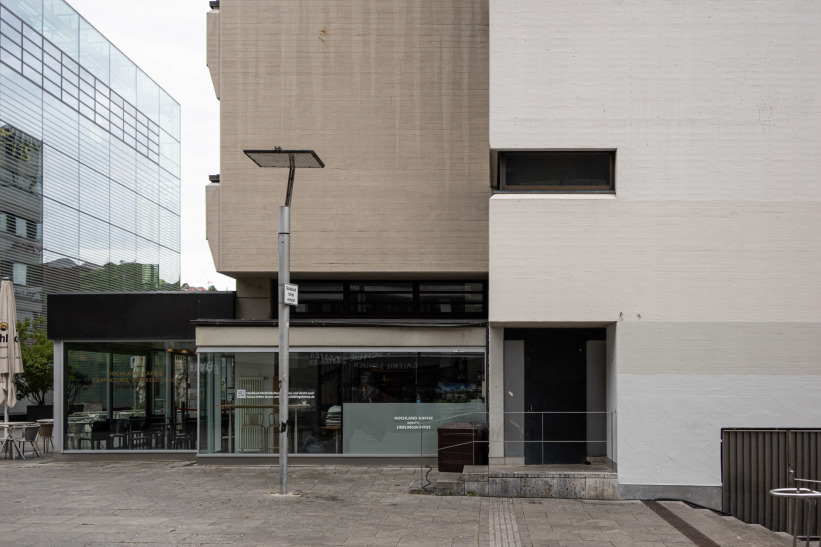
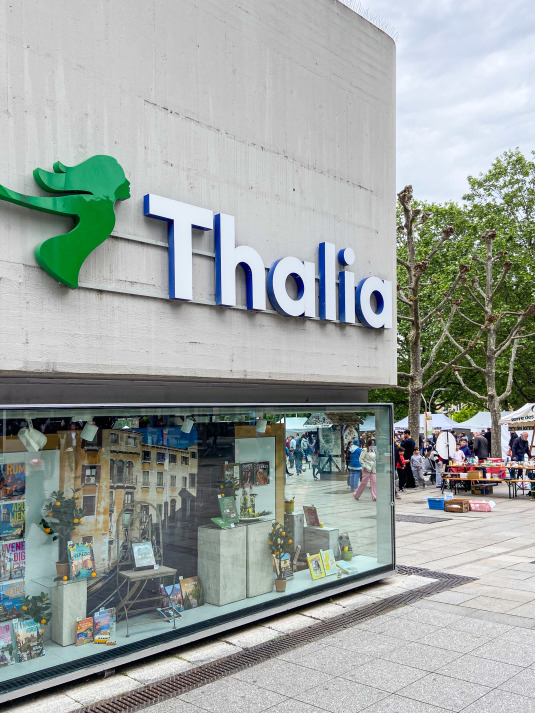
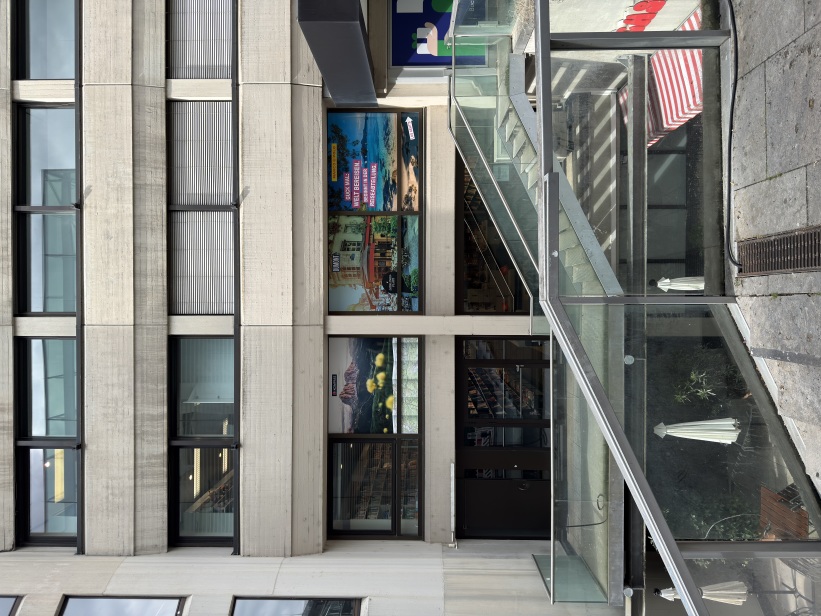
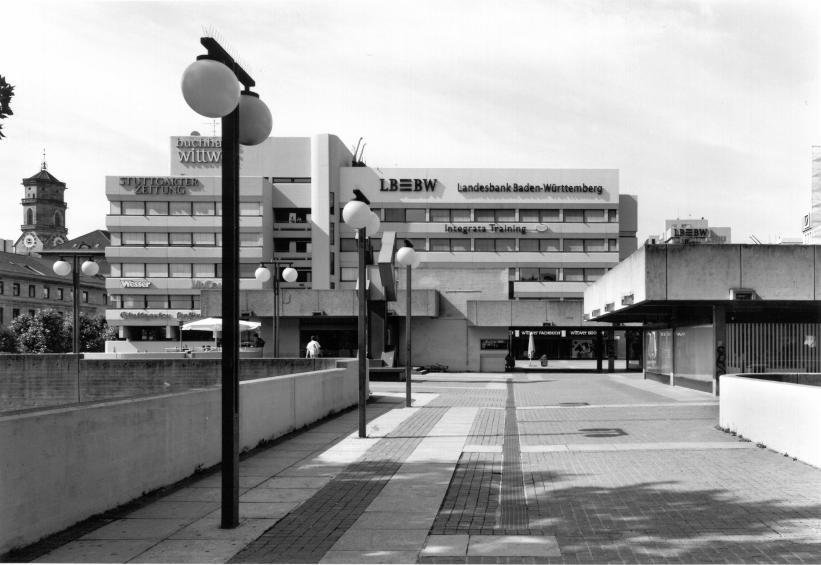
Completed in 1970 for the long-established bookseller Konrad Wittwer, the five-storey building combines retail, office, and formerly also gastronomic functions. The building is positioned at a right angle to the surrounding traffic routes, which accentuates its exposed location within the urban fabric. Entrances are provided on different levels, connecting both the Kleiner Schlossplatz and Königstraße and mediating the height difference of the site.
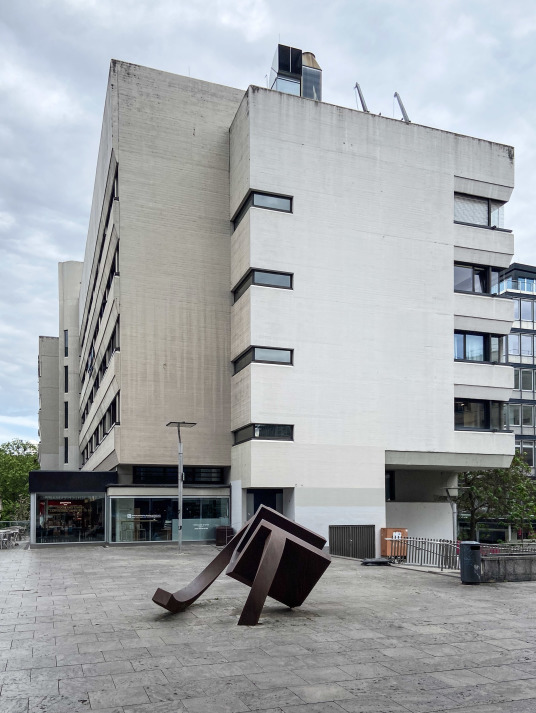
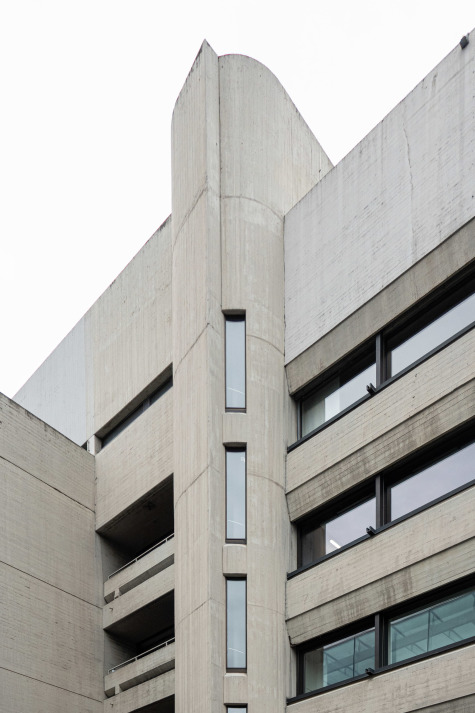
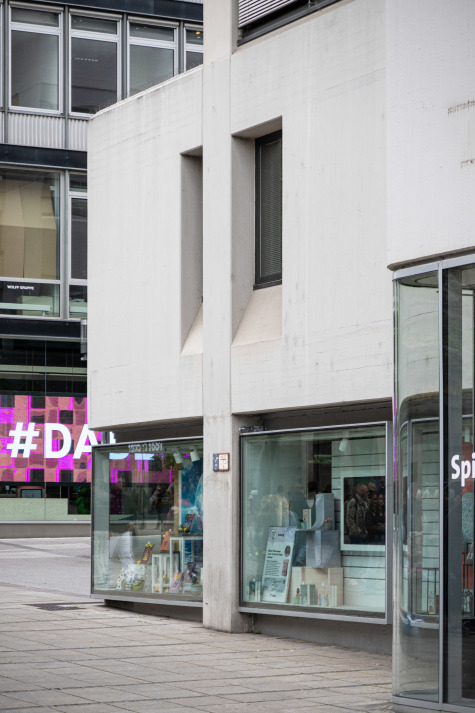
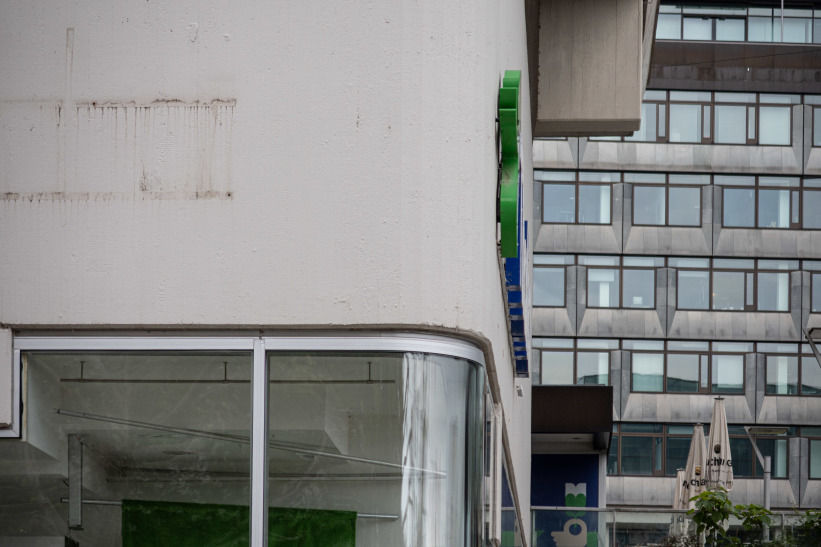
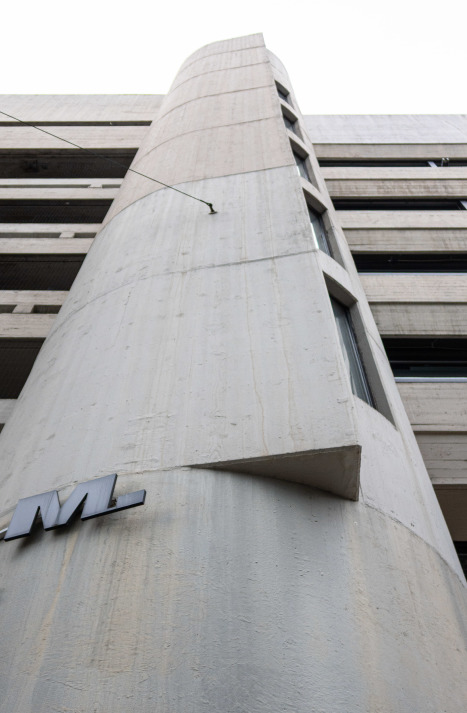
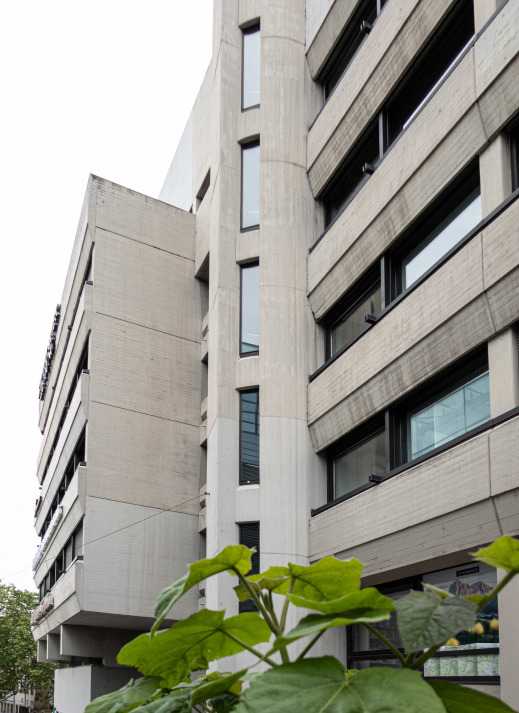
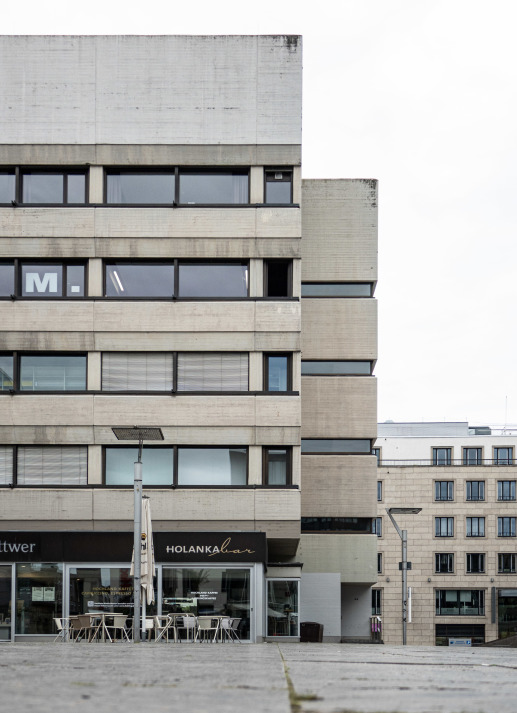
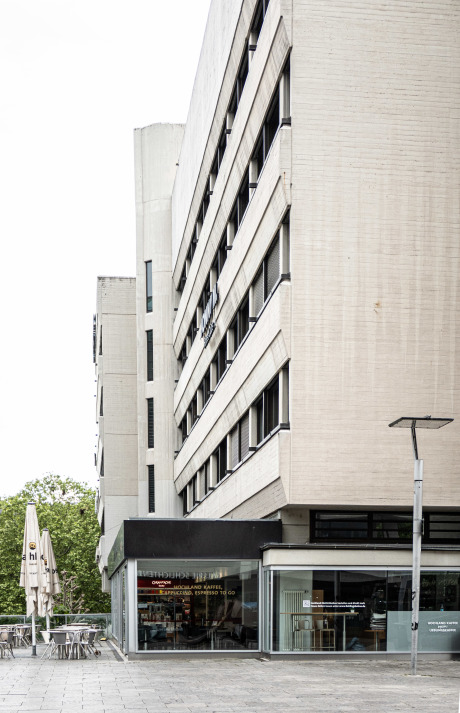
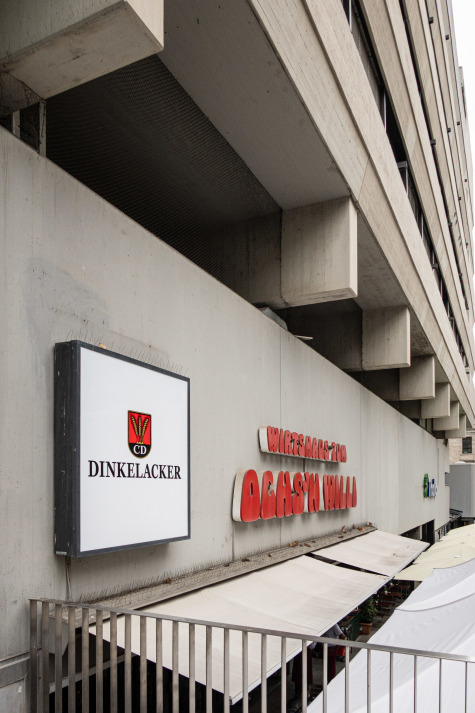
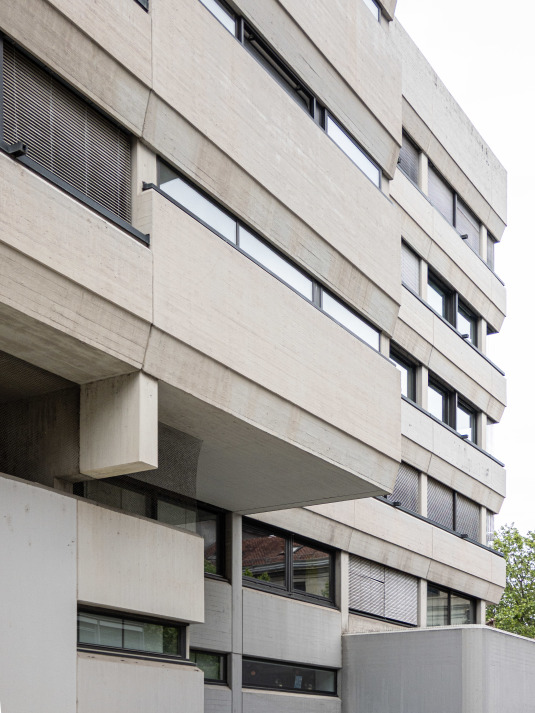
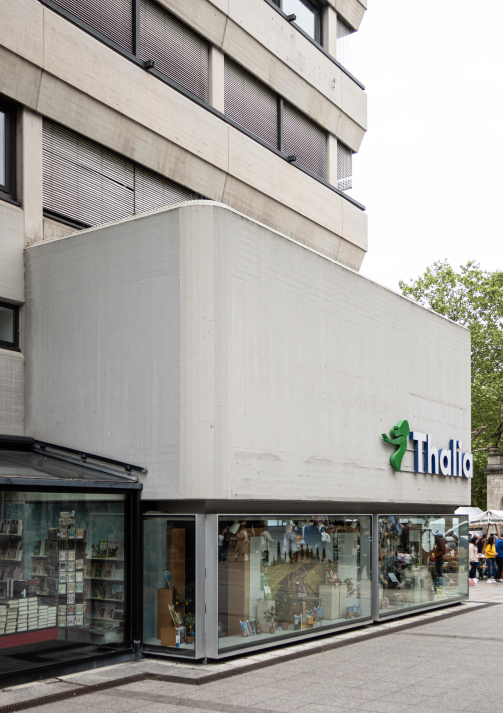
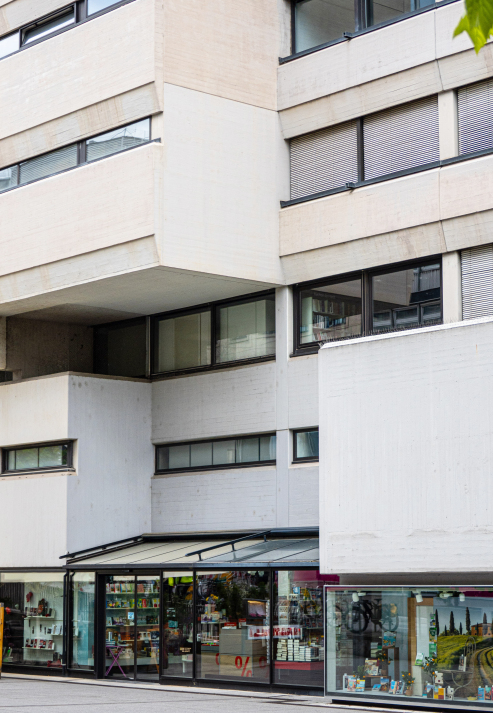
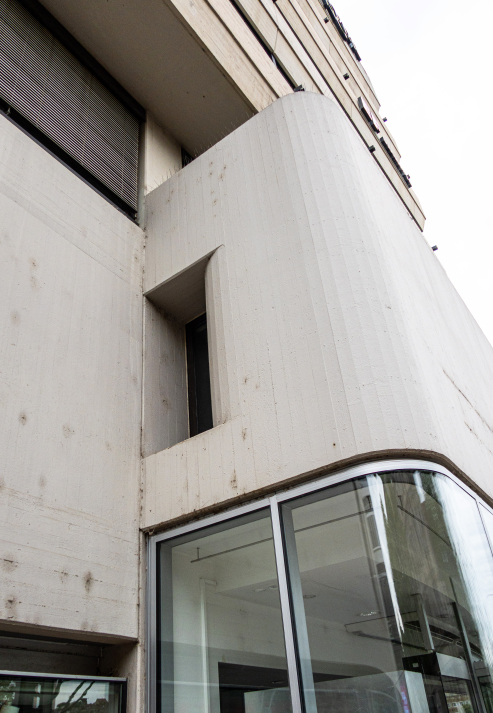
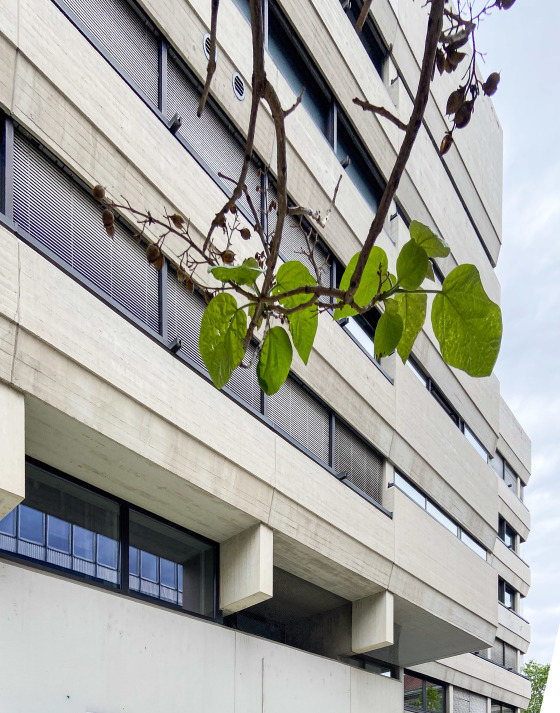
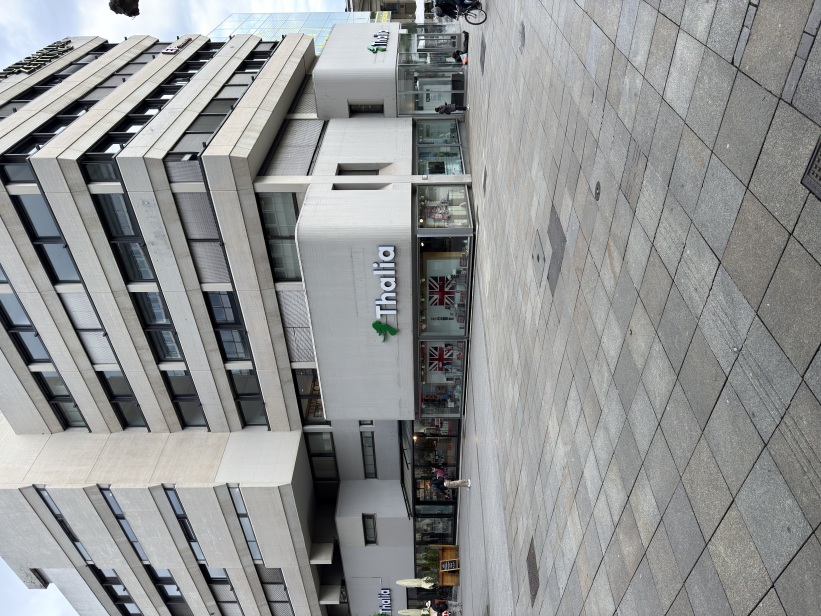
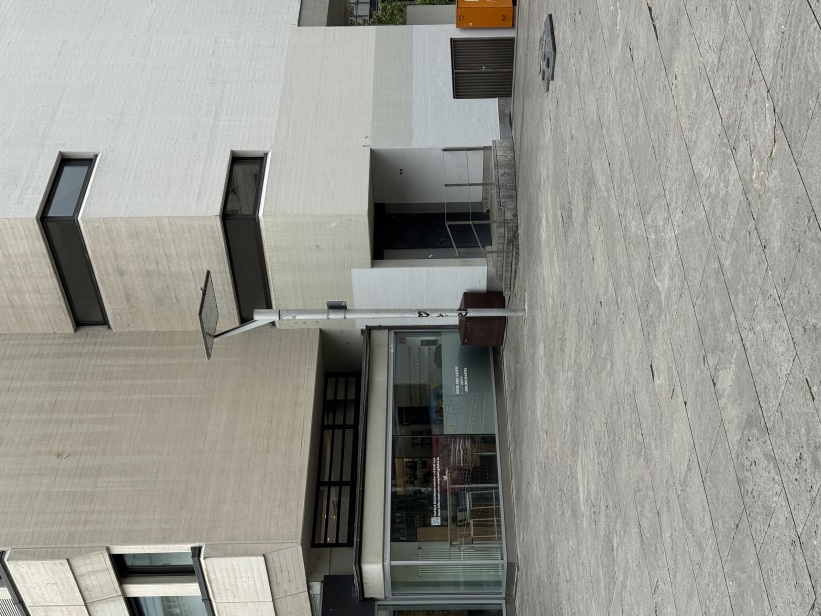
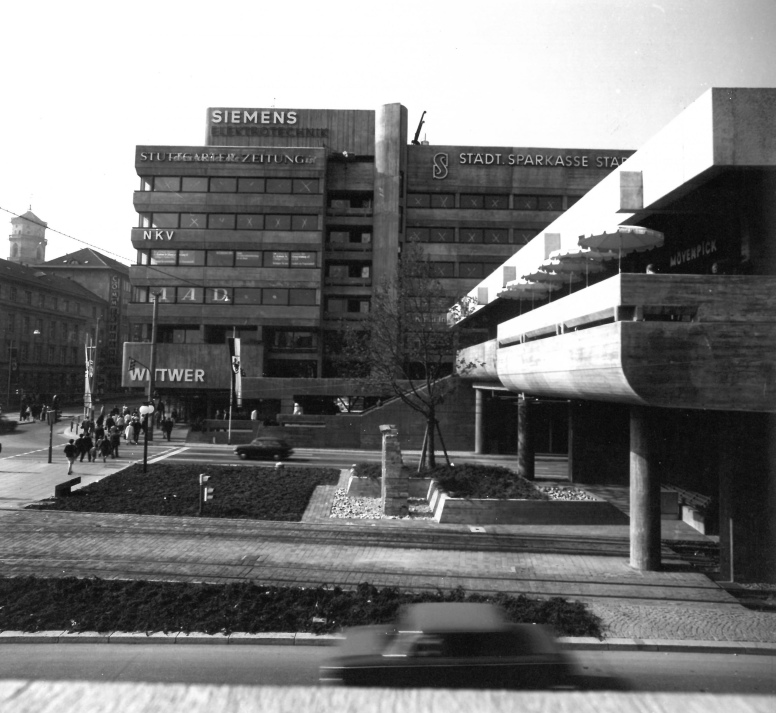
Architecturally, the building is characterised by a strongly articulated, layered composition. The façade is structured by alternating horizontal bands of exposed concrete and glazing, while vertical elements subdivide the overall volume. The staggered arrangement of the upper floors—set back on one side and projecting on the other—adds to the building’s dynamic appearance. Pronounced concrete beams and cantilevered sections emphasise the structural logic and create a sense of weight shifting across the volume. With its strongly plastic formal language and vertically board-marked exposed concrete, the Brutalist building asserts a distinct presence within its urban setting.
Further information, floor plans, and images of the carefully detailed interior design of the bookshop can be found on the website of the Hans and Maiti Kammerer Stiftung.
-
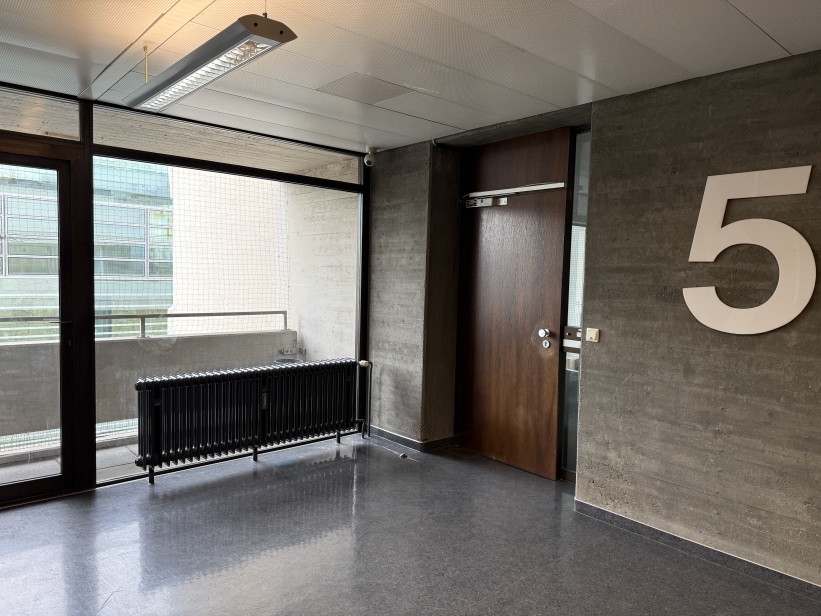
In use. During renovation works in the past, the exposed concrete was sealed with a grey coating, which now gives it a somewhat dull appearance.
As reported by the Stuttgarter Nachrichten on March 11, 2026, the building is to be demolished. All tenants are expected to have vacated the building by the end of 2027, with the dismantling of the upper floors scheduled to begin in 2028. The redevelopment is planned to introduce a mixed-use scheme comprising retail, gastronomy, offices, and services. An architectural competition is yet to be held to determine the final design for the project. The new building is expected to be completed by 2030.
On the initiative of the Association of German Architects Baden-Württemberg (BDA BaWü), the platform WITTWER IST NICHT FERTIG (literally: “Wittwer is not finished”) has been established. It brings together information, statements and activities related to the threatened Wittwer Building and highlights the growing number of people and organisations advocating for its preservation (last updated June 17, 2026).