Alois Atzberger / Erhard Leidner: St. Stephanus Church, 1966C–1967
- Kaiserslautern-Siegelbach, Germany, Show on map
- #REL #Western Europe
-
After the World War II, more and more Catholics moved to the once Protestant Siegelbach, increasing the need for a separate parish. From 1960, a church building association was founded, in which many local citizens became involved, until a plot of land was finally purchased in 1963 and construction of the new church could begin in 1966.
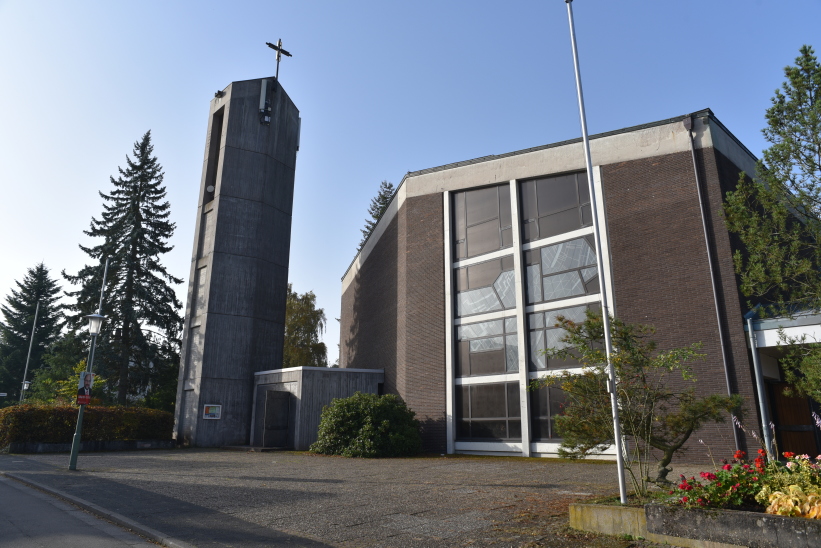
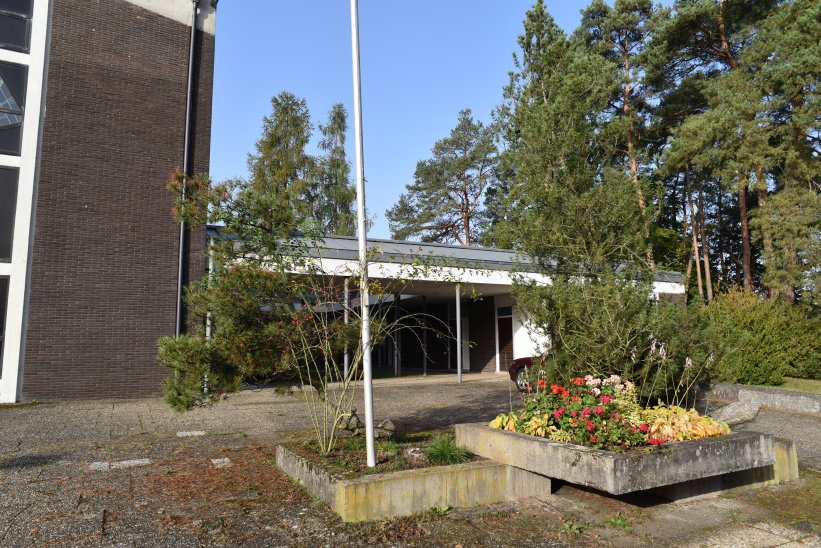
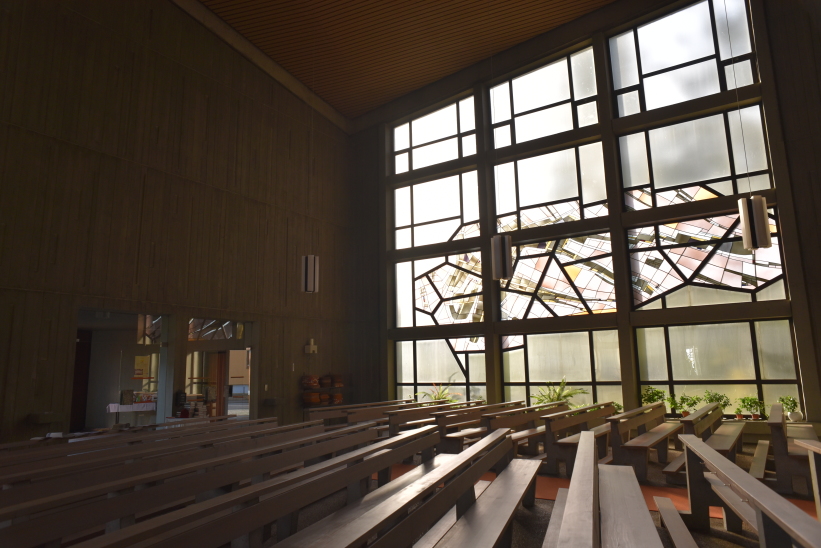
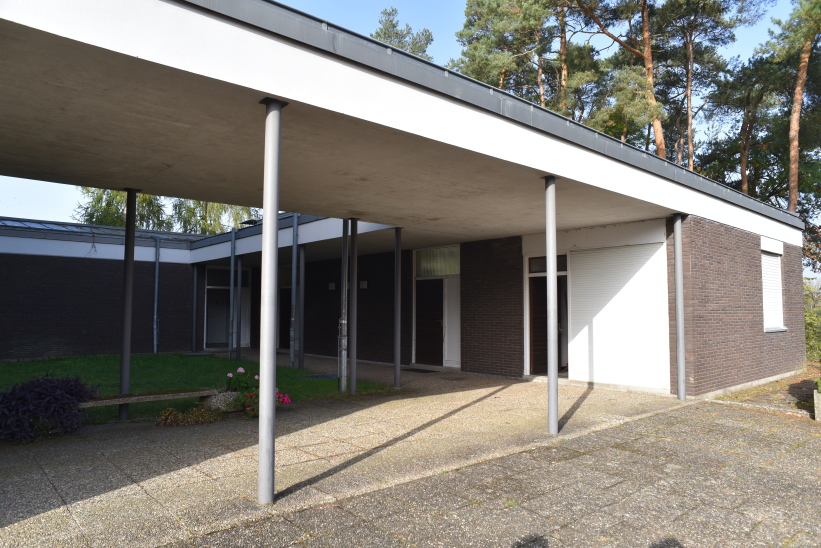
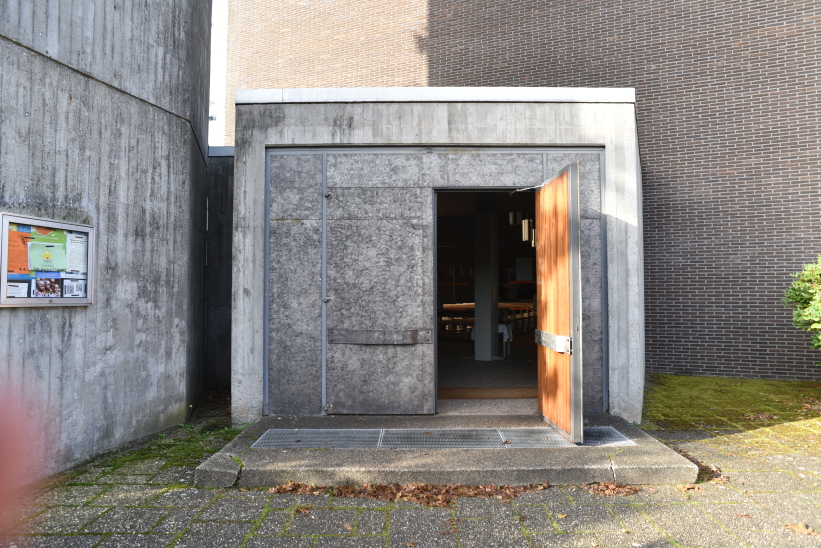
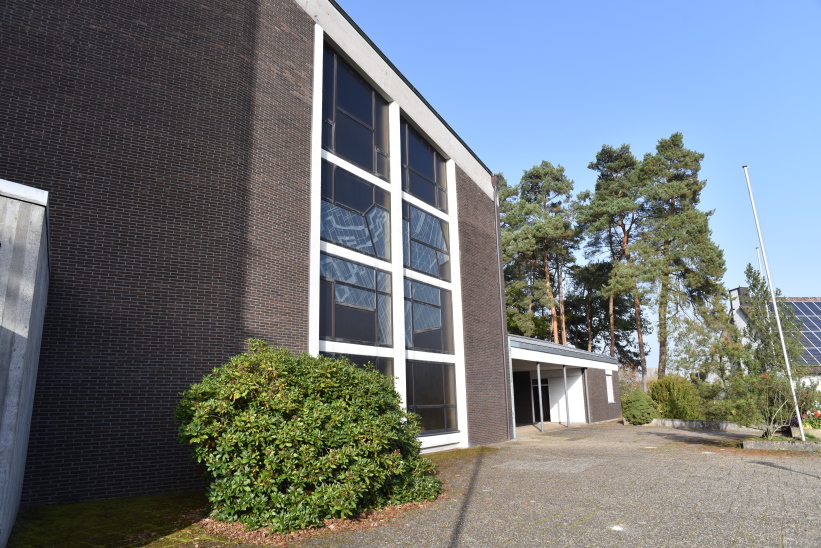
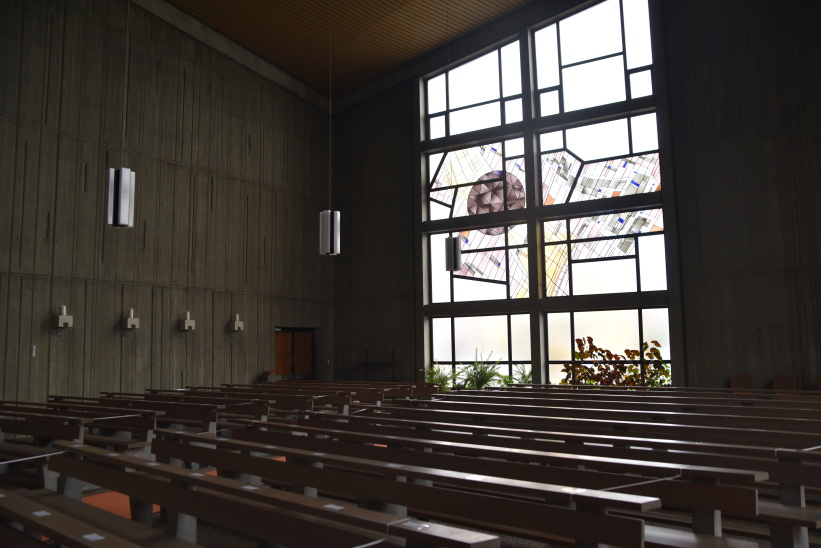
According to the plans of the episcopal building council Alois Atzberger and the architect Erhard Leidner, a polygonal hall building in reinforced concrete skeleton construction with clinker façades was built for the church, accompanied by a free-standing bell tower made of exposed concrete. Typical of the period, the forecourt is laid out with exposed aggregate concrete slabs and equipped with concrete planters. Canopied paths leading from the church to the parish rooms enclose a small inner courtyard with a lawn. The church hall has large windows, artistically designed by Atzberger himself, with crystalline-looking motifs that allow plenty of light into the interior space.
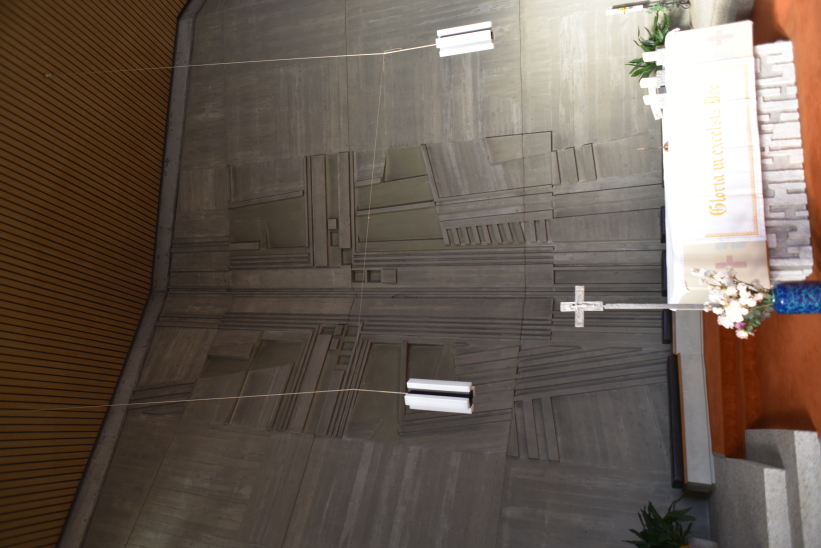
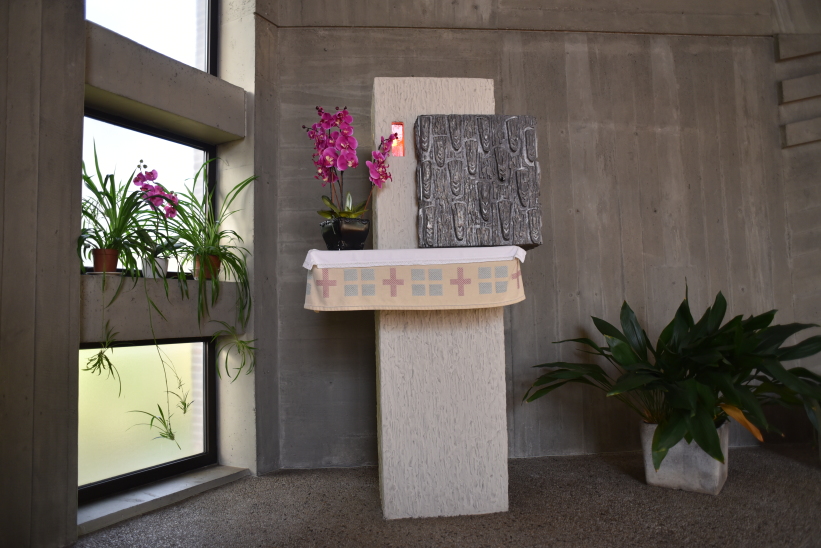
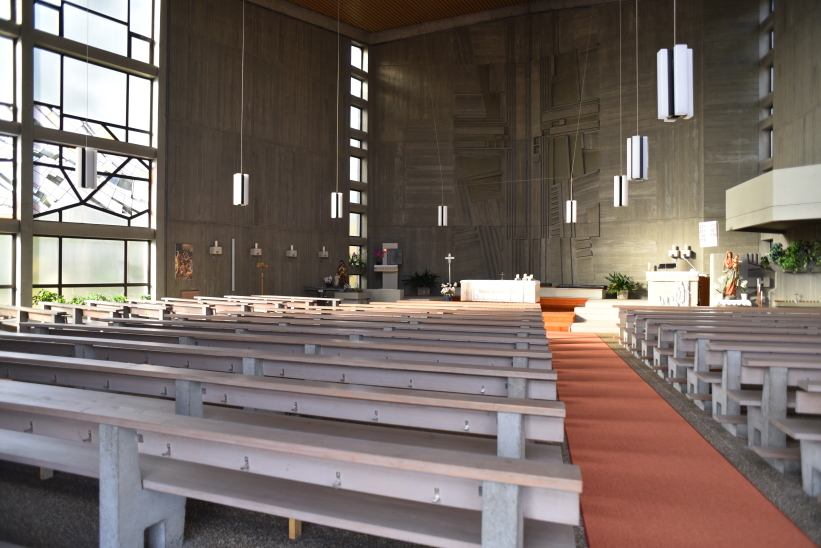
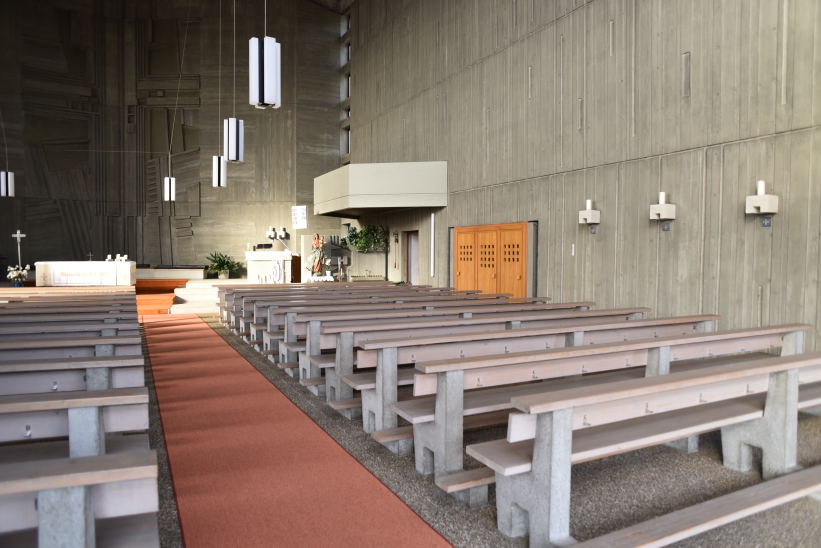
In terms of the material, the interior is dominated by exposed concrete: In addition to the rough, yet deliberately designed walls with their slatted patterns, candle holders and the legs of the pews are also made of it. The grand finale of the room’s design, however, is located on the altar wall, which tapers from the ground plan and features an expressive concrete relief that is reminiscent of a rock face, drawing a large cross in many intersecting furrows. The sculptor Karl Nuding is responsible for the decoration.
-
Heritage protected since June 21, 2023. While the church is largely in good condition, rusting window frames had to be replaced already back in 1970. However, the coming years will show how the building will be used in the future. At the church’s golden jubilee in 2017, the local pastor recounted as a contemporary witness that the building was designed too large from the outset. Today, the congregation is suffering from a decreasing number of members filling the space (last updated on January 5, 2024).