Le Corbusier: National Museum of Western Art, 1957D–1959
- Tokyo, Japan, Show on map
- #CUL #East Asia
-
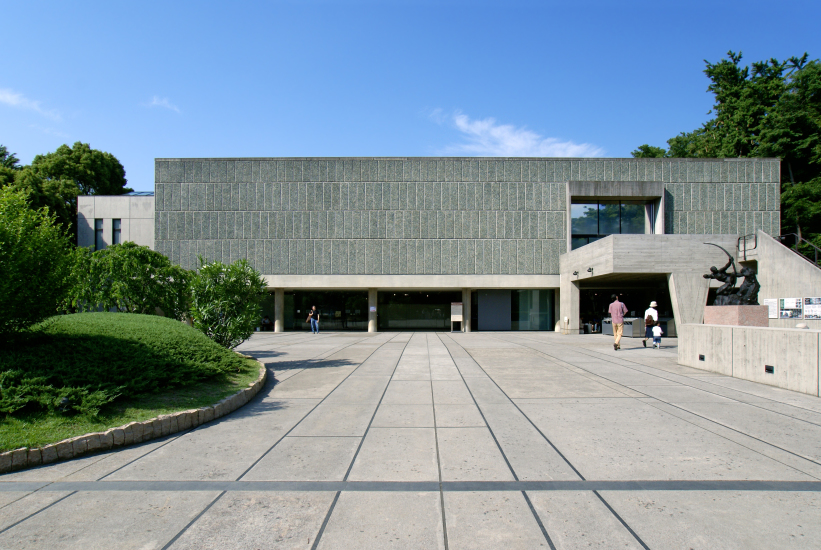
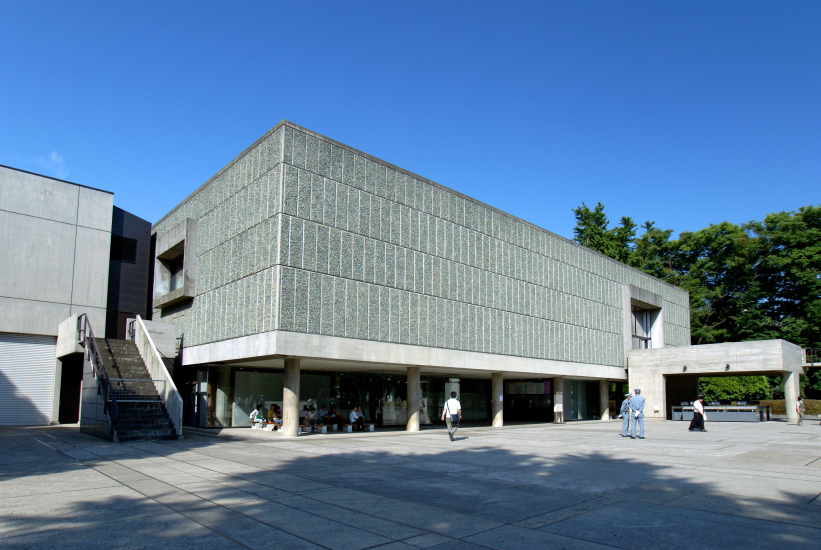
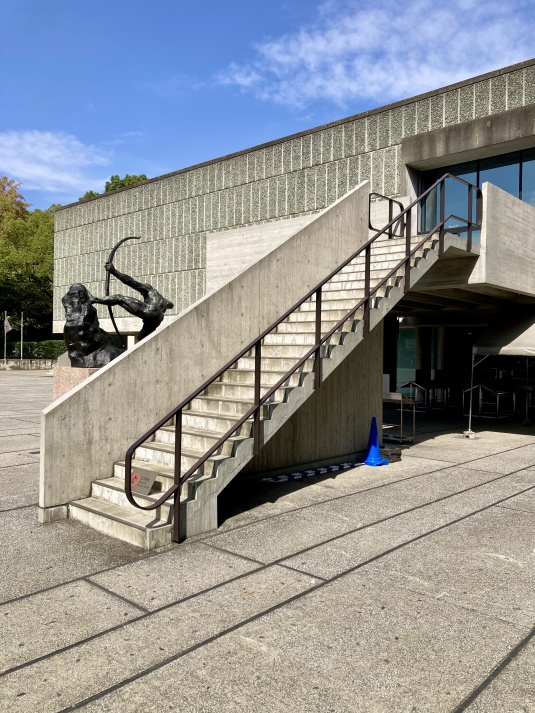
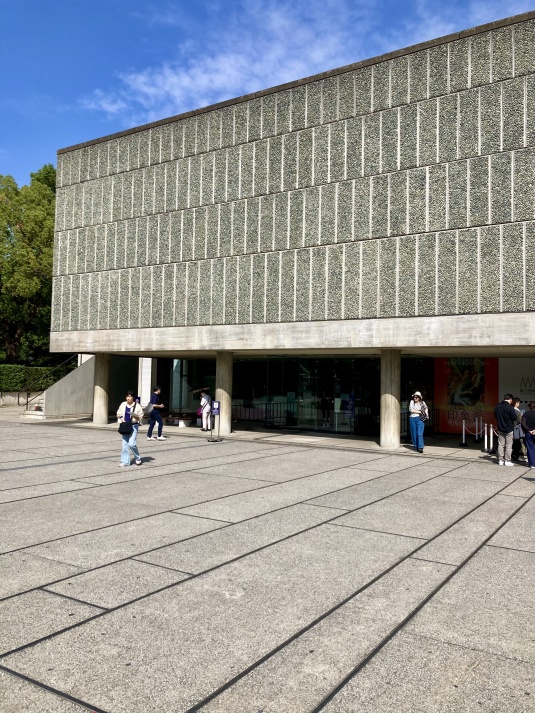
The National Museum of Western Art in Tokyo, designed by Le Corbusier and completed in 1959, is a square-plan, multi-storey reinforced-concrete structure raised on piloti. Its exterior is clad in prefabricated concrete panels, punctuated by large panoramic windows and balconies with open staircases that connect the building to Ueno Park. At the core lies a double-height central hall lit from above by a north-facing pyramidal skylight, from which a promenade ramp leads visitors to the first-floor galleries wrapped around the courtyard-like space. The galleries feature varied ceiling heights—initially low but rising to two storeys at the perimeter—and were originally designed to be illuminated by natural light through four roof-level lighting troughs.
-
Conceived from the outset as a structure that could be expanded over time, the museum has undergone several additions and upgrades. Sakakura Associates designed a lecture hall and office building in 1964, followed by a ticket office in 1984. Maekawa Associates completed a major annex in 1979, which—together with the original building—creates an internal courtyard; further extensions in 1997/98 included an auditorium and temporary exhibition spaces. During the 1997–1998 works, the Ministry of Construction, Yokoyama Engineering, and Shimizu Construction also implemented significant seismic reinforcement, and the existing structures were renovated. The museum has been widely recognized for its architectural significance, and since 2016 it has been listed as part of the UNESCO World Heritage Site The Architectural Work of Le Corbusier (last updated on November 24, 2025).
Special thanks to Wilhelm Opatz for the hint!