Hannes Rosenkranz: Gymnasium Gammertingen, 1964D–1973
- Gammertingen, Germany, Show on map
- #EDU #BestPractices #Western Europe
-
Renovation Without Heritage Protection: It’s Worth It
By Miriam Kremser · Published December 10, 2025
This school building from the 1960s is exemplary of a concrete modernism of the period that was often quite ambitious yet goes unrecognized in Germany. But what makes the case unusual is how carefully the building was handled during its most recent renovation. The striking concrete surfaces were neither painted over, nor hidden under layers of insulation. Crucial for this strategy was the careful attitude of the architects tasked with the renovation, the long-term energy budget, and the project’s low costs. This is part 4 of our four-part Best Practices series showcasing examples of successful renovations, gathered for the 10th anniversary of the SOS Brutalism online campaign (on the Gallery page, search for #BestPractices).
The architecture
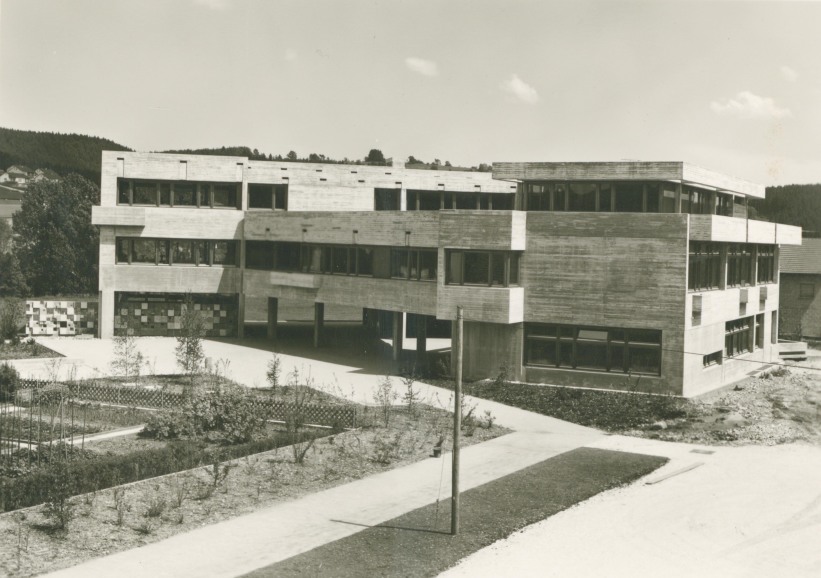
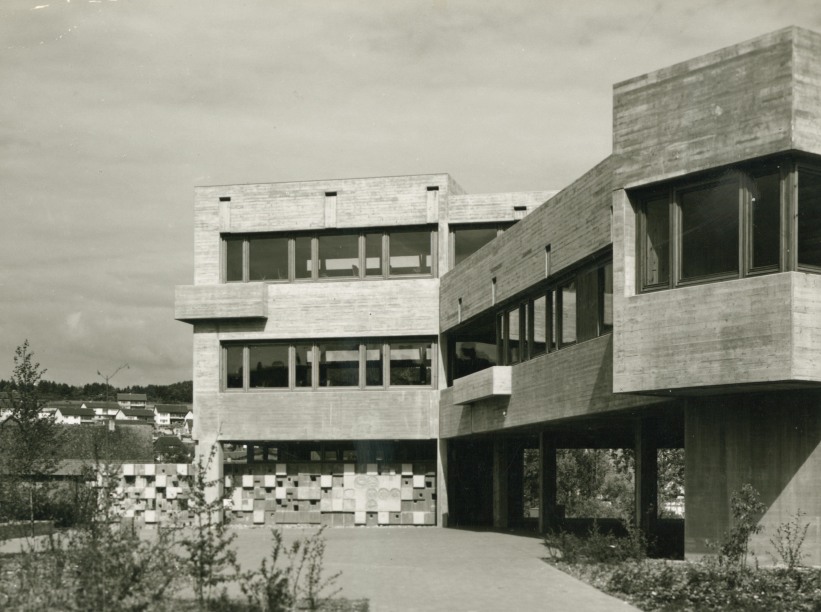
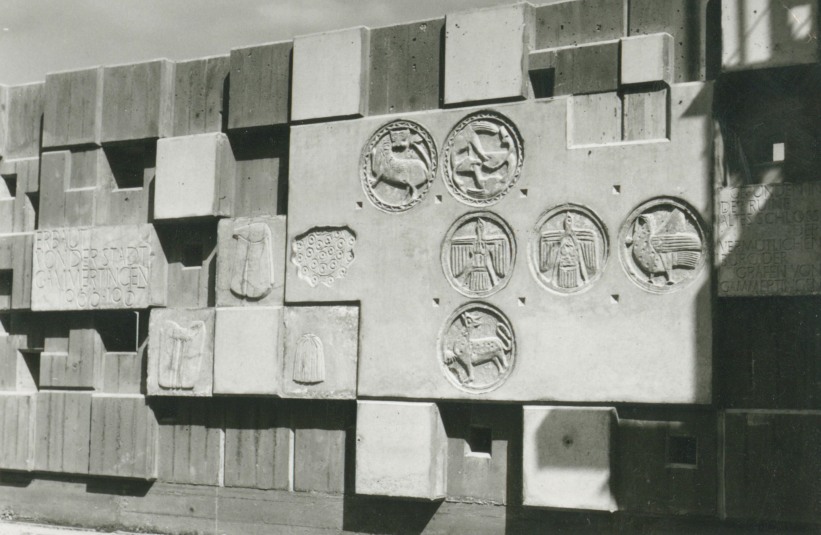
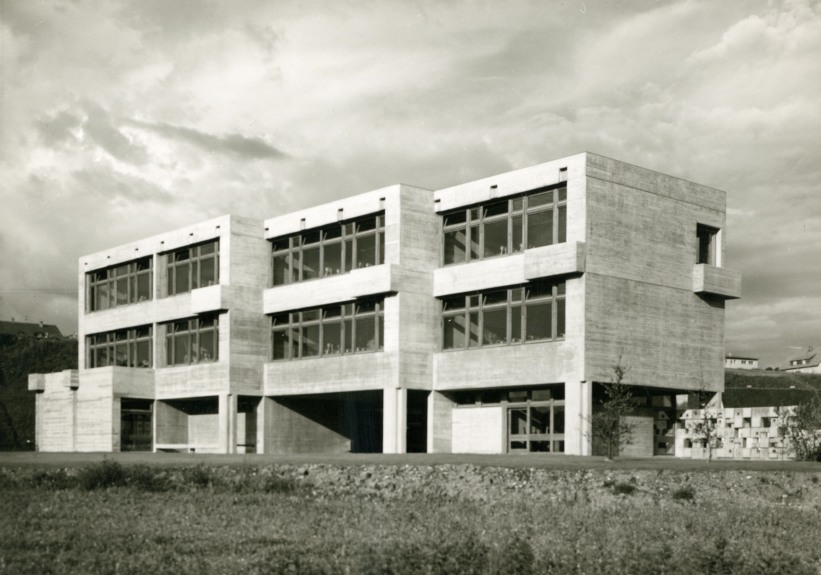
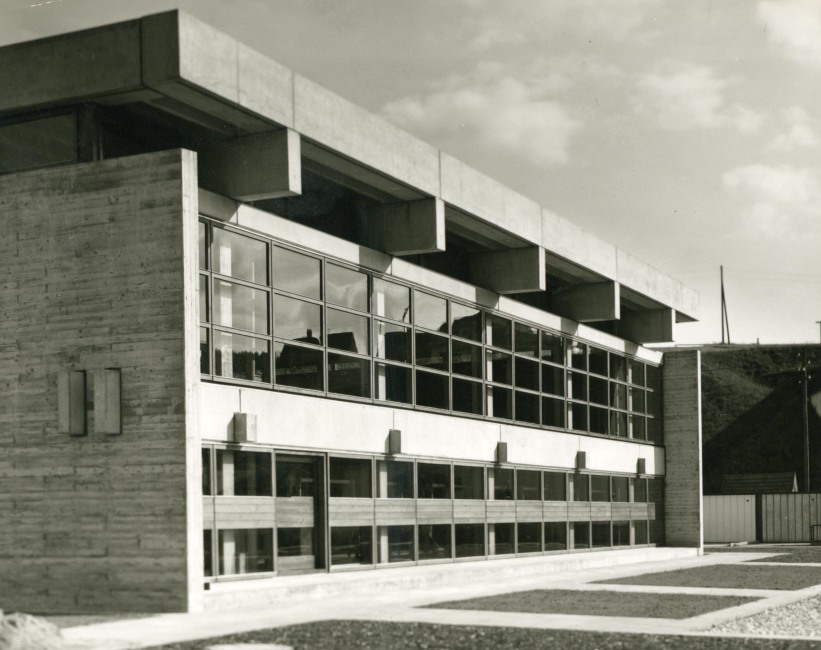
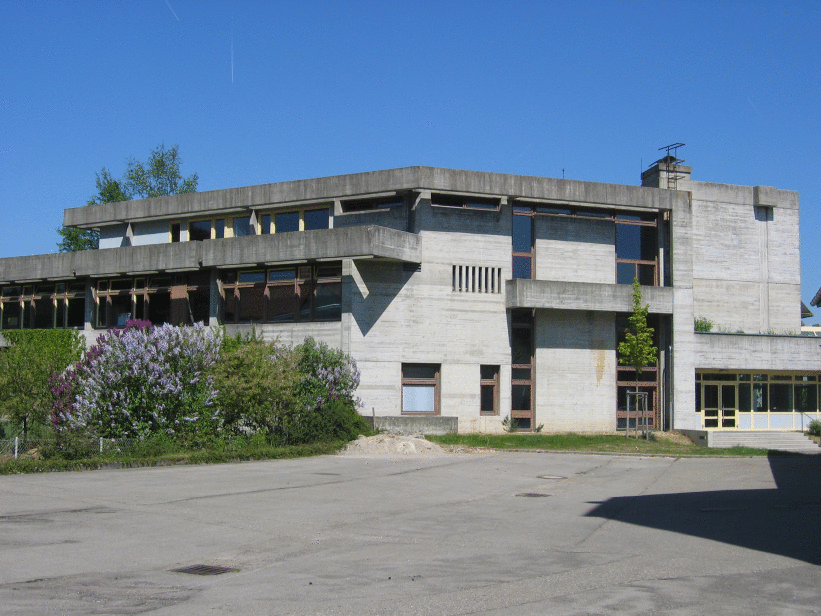
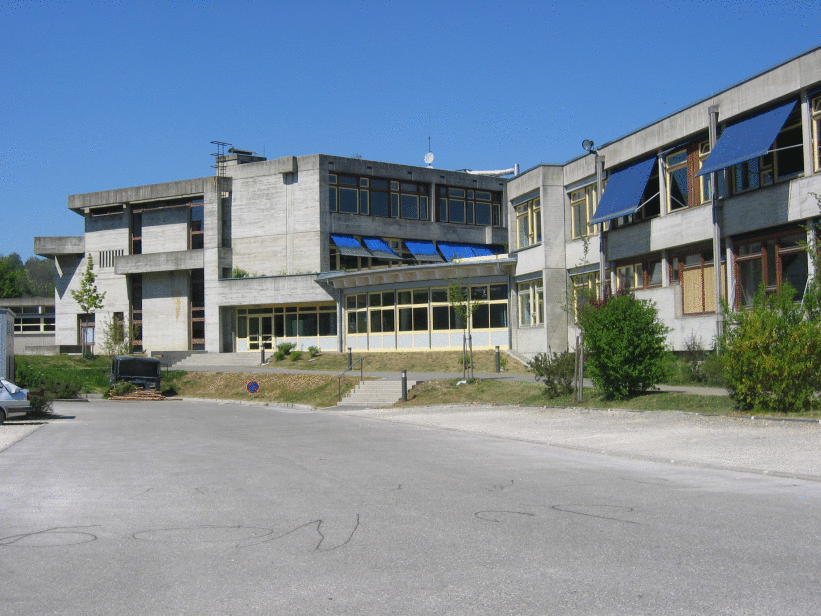
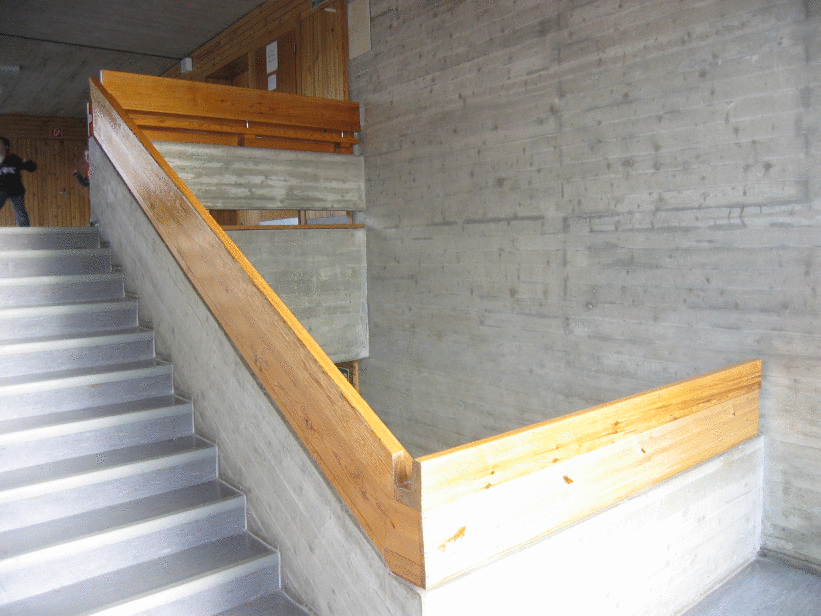
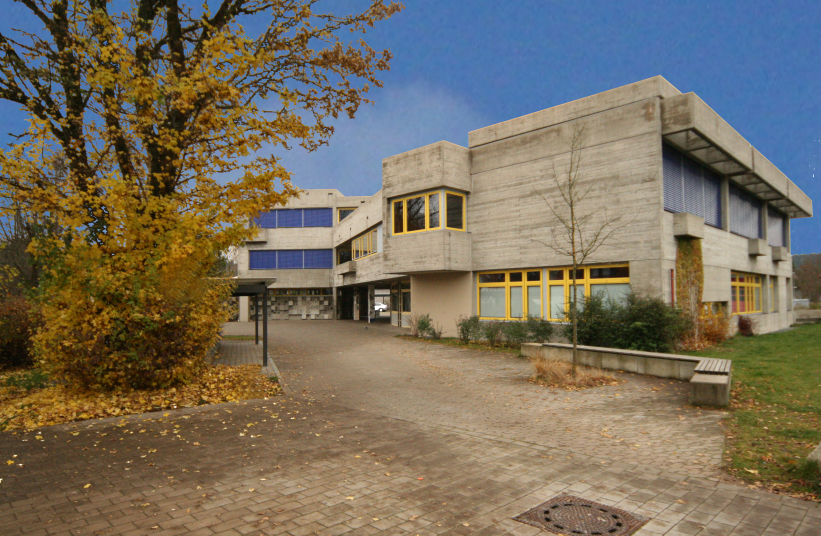
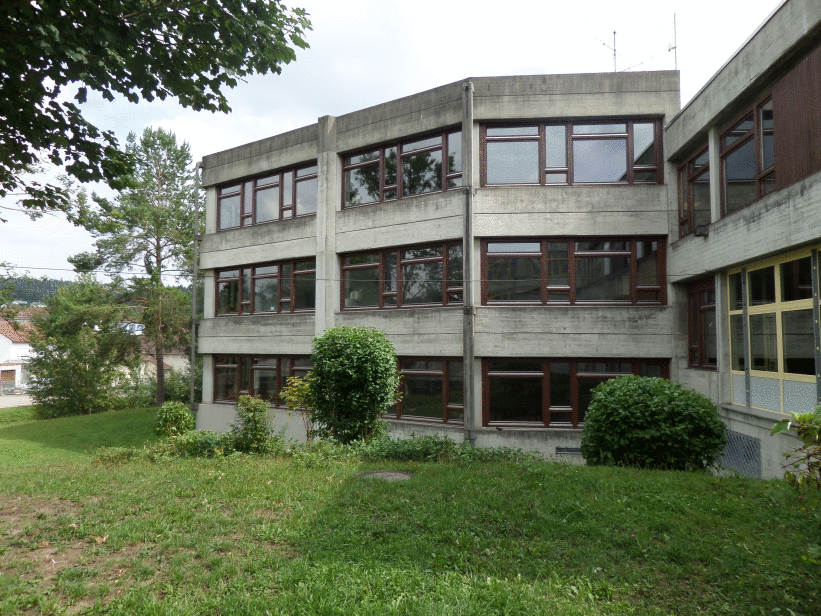
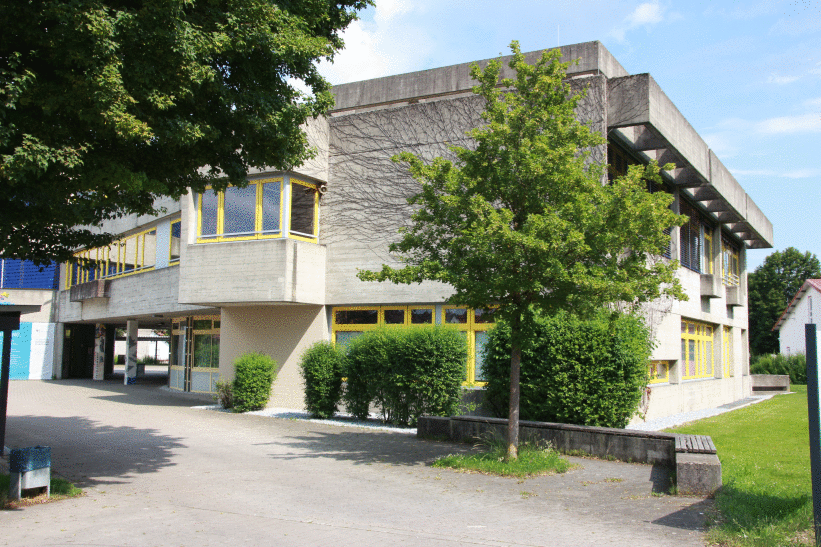
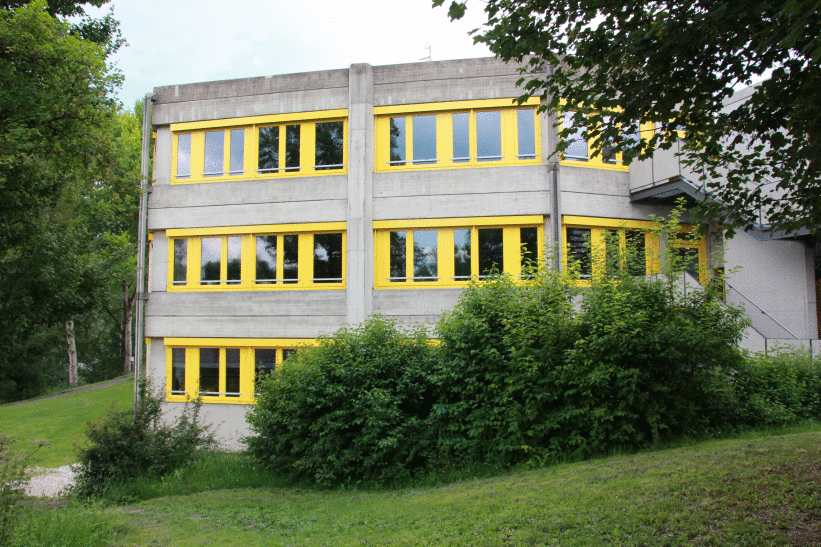
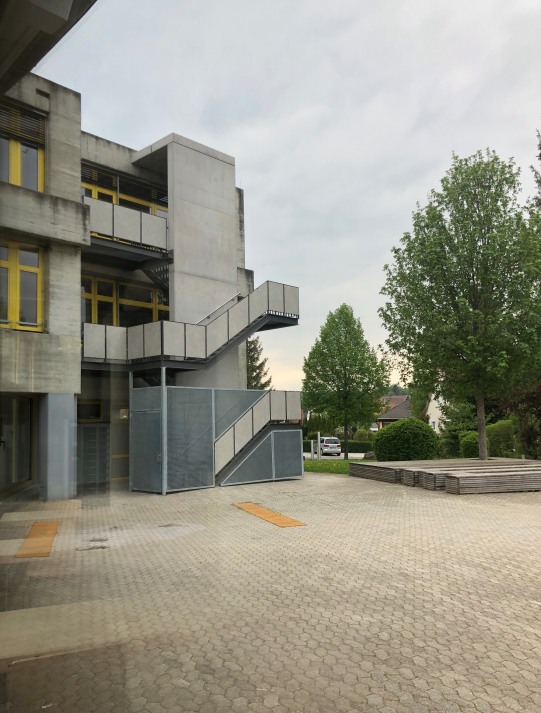
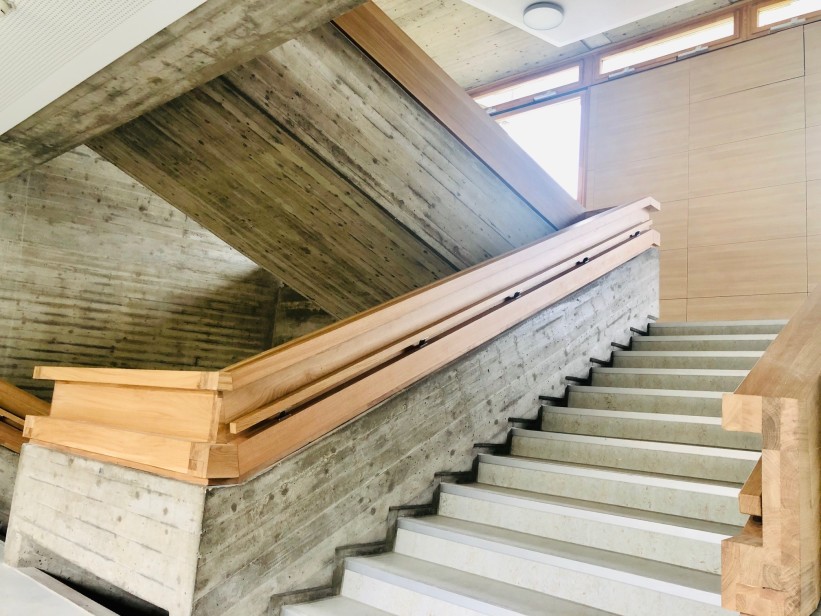
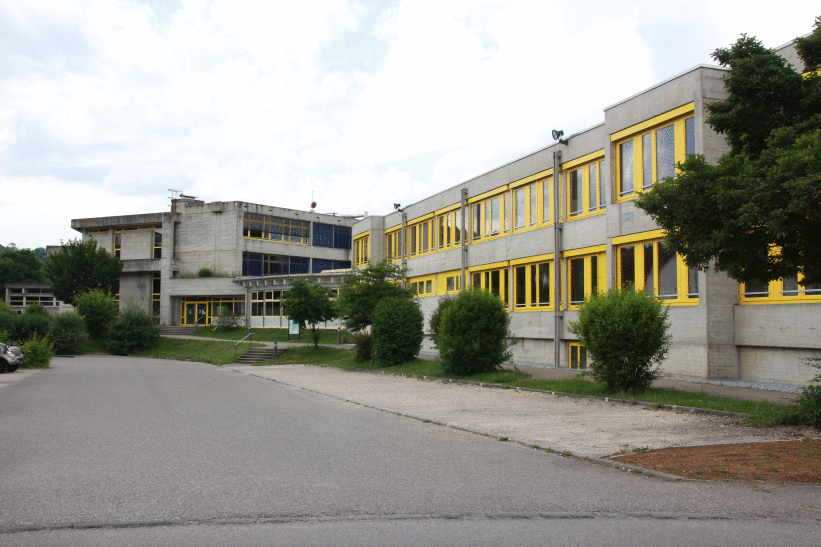
In the 1950s, a high school was needed in the vicinity of multiple rural municipalities in the Swabian Jura. In 1952, a parents’ initiative succeeded in setting up a secondary school in Gammertingen, a town of 3,154 inhabitants. It was initially housed in a temporary structure, until an architectural competition for the construction of its own building was held in June 1964. In November of the same year, out of 27 entries, the architect Hannes Rosenkranz from Hechingen was chosen to design the construction. He designed a school building in exposed concrete whose floor plan was shaped like an ‘A.’ Details such as shade-creating awnings and water spouts were also cast in concrete. The formwork, executed with great care, left a horizontal pattern. Stair rails, window frames, and partial wall coverings in the interior were done in timber. And outside in the courtyard there is some “percent for art”: a concrete relief wall with cubic elements, glass bricks, and seal-like imprints of fragments dating to the High Middle Ages, which were found in the nearby ruins of Baldenstein Castle in Gammertingen before construction of the school began. In two subsequent stages, the structure was expanded to include a sports hall and a square building with a polygonal projection to house additional classrooms.
The Brutalist ensemble of school buildings by Hannes Rosenkranz clearly stands out from the townscape of Gammertingen, dominated as it is by classic gabled roofs with natural red tiles. Described as “somewhat unusual” by the Schwäbische Zeitung in 1968, the school complex forms a striking element in the urban landscape.
-
Why the building was in danger
The long list of damages and defects after more than 50 years of use included badly insulated and partly opaque windows, inefficient and broken awnings, old bathroom facilities, deficiencies regarding fire safety and accessibility, and leaks in the roofs. Particularly palpable was the need to restore the Brutalist building’s façade: the concrete was crumbling in places, leaving the concrete reinforcement exposed and patches of rust on the walls. Beginning in 2007, numerous defects were repaired in small partial renovations. Yet there was a need for a more thoroughgoing solution for the damaged concrete surfaces. In order to resolve the issues with the façade, plans were made in 2018 to partially cover it with yellow and blue cladding panels.
How the renovation unfolded
Yet the firm tasked with the renovation, supper heinemann architekten from Gammertingen, was opposed to this. Margit Supper (who spent some of her own school years in the building), Elmar Heinemann, and their team recognized the structure’s unique architectural qualities. The building, however, is not officially heritage protected. It was necessary, therefore, to persuade the city’s decision-makers.
To develop their renovation concept, supper heinemann architekten enlisted the help of SMP Ingenieure im Bauwesen GmbH from Karlsruhe. The engineering studio had made a name for itself in the sensitive restoration of concrete buildings—taking an approach shaped by the restoration of the Brutalist Liederhalle in Stuttgart by members of today’s SMP team back in the 1990s. Since then, their expertise has developed through countless other projects. The sensitive restoration of a concrete structure entails “as much [intervention] as necessary, yet as little as possible” into the existing structure (Baumstark et al. 2019, 18). Rather than a one-size-fits-all solution, for example, by completely coating a damaged exposed concrete façade or covering it with cladding panels, sensitive restoration involves proceeding bit by bit and only working on existing and potential sites of damage. This also leads to positive environmental and economic outcomes, as it conserves material and the restoration is simplified. An investigation during the renovation of the school building showed that, apart from the damaged parts, the concrete was intact and so was suited to this method. The argument about lower costs ultimately also convinced Gammertingen’s municipal council. Heating costs would remain significantly higher than if the restoration had entailed adding external insulation, yet the overall budget seemed plausible to the municipality. The architect had calculated that it would take around 75 years for the costs of a classical energy-efficiency renovation entailing a new external shell to pay themselves off. It is extremely unusual for the original wall construction not to be changed in a renovation.
The sensitive restoration was carried out in numerous stages by SMP under the direction of DEng Martin Günter, DEng Werner Hörenbaum, and Dipl Eng Hubert Baumstark. The first stage entailed cleaning all exposed concrete surfaces. In the interior, surfaces were blasted with dry ice, while outside, a gently moistened glass granulate blasting material with significantly reduced pressure was employed. This allowed stains to be gently removed without affecting the characteristic texture of the exposed concrete’s formwork patterns. Irregularities not due to damage were left as they were. Damage sites with crumbling concrete and corroded steel were repaired by making initial incisions a few millimeters deep into the concrete shell, which were aligned with the contours of the formwork patterns. The damaged concrete between the incisions was removed, and the reinforcement was exposed and cleaned. Like a dental filling, the resulting gap was then refilled—with a cement-based bonding bridge and a restoration concrete adapted to match the existing concrete. The fresh surface of the restoration concrete was then shaped to fit as seamlessly as possible into the formwork pattern of the original concrete.
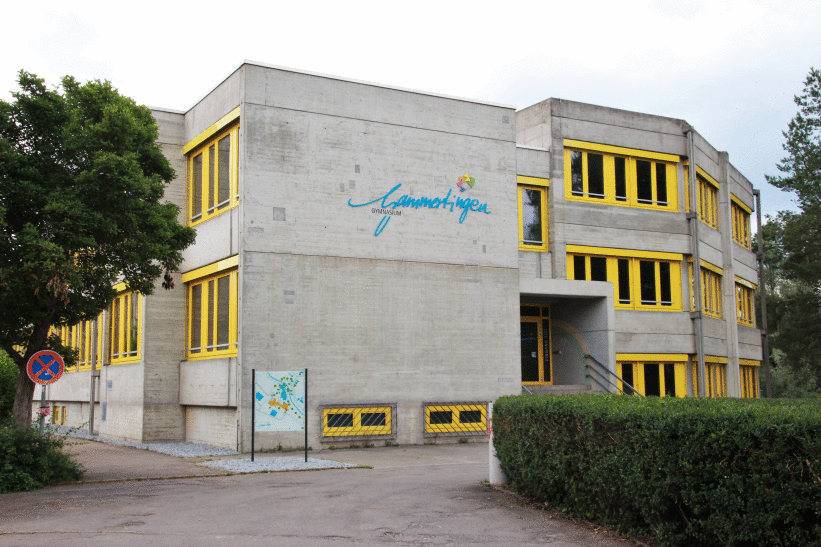
The architects’ interventions encompassed other areas: all windows were replaced, the roofs were insulated, while new elevators, fire escapes, and awnings were added. The yellow window frames follow an earlier renovation, in which some of the original timber frames were replaced with yellow metal ones. In the interior, the exposed concrete and sand-lime walls were left as they were. Some of the historical timber walls were replaced with approved fire-safety cladding. Regarding timber: handrails have repeatedly proven to be essential to the character of Brutalist architecture. In the present case, the old handrails were replaced with oak timber rails that resemble the originals but are positioned slightly higher. This fulfills present-day safety regulations, while the timber used accords with contemporary fire-safety requirements.
The combination of these interventions made it possible to bring the unique atmosphere of the existing structure into the present. But not everyone is pleased. The architect explains that her own children, who attend the school, have been told that her parents are responsible for architectural “monstrosities.” But SOS Brutalism’s interest in the school has caused other reactions in Gammertingen: the local newspaper proudly reported on the question of “Why This Block of Concrete Has Suddenly Become a Showpiece” (Schwäbische Zeitung, June 18, 2024). The answer? “What Others Find Ugly, Researchers Find Fascinating.” Truer words never spoken!
Translated by Marty Hiatt and Rob Madole for Gegensatz Translation Collective
Other parts of our Best Practices series on the 10th anniversary of the SOS Brutalism online campaign:
Part 1: Gottfried Böhm: Mary, Queen of Peace Pilgrimage Church, Neviges, Germany, 1963–1968
Part 2: Gert Walter Thuesen and Jacob Grytten: Stavanger Svømmehall, Stavanger, Norway, 1964–1971
Part 3: Claude Paillard, Theater St. Gallen, Switzerland, 1961–1968
Bibliography:
“Wichtiger Fortschritt für das Bildungszentrum Gammertingen,” Schwäbische Zeitung (July 5, 1968)
Hans Schunk et al., 20 Jahre Gymnasium i. A. Gammertinge: 1952–1972 (Gammertingen 1972)
Barbara Scholkmann, Burg Baldenstein. Das “Alte Schloß” bei Gammertingen (Sigmaringen 1982)
“Teures Erbe aus Beton: Gymnasium Gammertingen wird für fünf Millionen Euro saniert,” Schwäbische Zeitung (June 5, 2018), https://www.schwaebische.de/regional/sigmaringen/gammertingen/betonschule-wird-fuer-fuenf-millionen-euro-saniert-369915 (accessed July 7, 2025)
Hubert Baumstark, Alexandra Fink, Martin Günter, and Werner Hörenbaum, “Der Weg der behutsamen Betoninstandsetzung: Das Beispiel Stadthalle in Lahnstein,” Die Denkmalpflege, no. 1 (2019), pp. 13–25
Julia Brunner, “Warum dieser Betonklotz plötzlich zum Vorzeigebau wird,” Schwäbische Zeitung (June 18, 2024), https://www.schwaebische.de/regional/sigmaringen/gammertingen/warum-dieser-betonklotz-ploetzlich-zum-vorzeigebau-wird-2618394 (accessed July 7, 2025)
Special thanks to Manfred Tremmel (Stadtarchiv Gammertingen), Julia Brunner (Schwäbische Zeitung), and Christoph Schlemmer (Landesarchiv Baden-Württemberg, Staatsarchiv Sigmaringen) for their research support, and to architect Margit Supper as well as engineers Hubert Baumstark and Martin Günter for providing further information about the renovation